
How Ibogaine Could Treat Depression and Anxiety – Nolan Williams at TED2025

In his 2025 TED Talk, Nolan Williams argues that institutional resistance, driven by those who reject simple, plant-based medicinal solutions in favor of complex, man-made chemicals, can delay the adoption of natural therapies, and in doing so, lead to loss of life.

For example, this paradigm delayed the cure for scurvy for over a century and cost a million lives. In his talk Nolan offers the opinion that this same approach is being repeated today, by keeping powerful psychedelic plant medicines like ibogaine — which show dramatic efficacy in treating traumatic brain injury (TBI), post-traumatic stress disorder (PTSD), and addiction — illegal as it’s classified as a Schedule I drug, thus preventing life-saving treatments from those in need.

As director of Stanford University School of Medicine’s Brain Stimulation Lab, Nolan could have approached this topic from a highly technical angle. Instead, he takes us on a journey, beginning with a stop onboard a British naval vessel in 1756. Here he sets the stage for his premise — that nature sometimes offers a cure to a common human ailment, but if there is resistance to adoption, the delay can cost lives.

He then introduces a new plant-derived medicine, ibogaine, used historically by the Bwiti people. He shares the story of Marcus Capone, a Navy SEAL who had to travel to Mexico for the illegal compound that saved his life, convincing Williams to study it.

You're already a storyteller guide at Lemon Squeezy

What’s interesting is that, instead of recounting the details secondhand, Nolan uses clips of an interview with Marcus so that we hear his words directly. This may or may not be an option when you’re telling your story in public, but it’s a technique to consider when the possibility exists.

As this treatment is controversial, and has potential side-effects, he concludes with both a sense of caution, and a call for open-minded, data-driven evaluation, warning that “the clock is ticking” on the edge between institutional rejection and acceptance.

It’s obvious that Nolan believes in the potential of this treatment, but at the same time he carefully chooses his words and doesn’t make universal claims that are not supported by the research to date. This is a factor that anyone telling a science-based story needs to pay attention to.

Transcript

Alright, it’s 1756. You’re all aboard a British naval vessel headed to the New World. You’re down below deck with your fellow sailors, and you’re all sick. Your legs are swollen, your gums are bleeding, you just lost a tooth. You go to the ship’s doctor and he tells you this is due to internal decay and laziness.

You ask about this foreign fruit medicine, the citrus medicine that you could take, and he tells you that this is not a treatment for what you have. It’s too simple; it’s a plant medicine. And he’s an anti-fruiter. And instead, he prescribes you arsenic tonics. True story. And you get worse. And when you get to the new world, half of your shipmates are deceased.

My name is Nolan Williams, and I’m here to talk to you about anti-fruiters: people who weaponize scientific skepticism to thwart new treatments from getting out to the world.

And so scurvy is an illness that killed two million people from the time of Columbus all the way through to the time of widespread citrus adoption. And scurvy is the result of a lack of vitamin C in the diet. And the reason why these sailors had a lack of vitamin C is because it was a long sea voyage, so you need to eat dried meats and that sort of thing.

And so we observed early on in the 1500s, this association between eating citrus fruit and the prevention or the treatment of scurvy. And so it was written early on that this was a precious medicine, something that could be used for this problem. So much so that it actually birthed the world’s first clinical trial. So the clinical trial, as a scientific tool, is the result of trying to find a solution for scurvy.

And so they gave all these man-made treatments, and then they gave citrus. And I don’t have to tell you what the answer to this scientific question was. The people that got the citrus fruit were helping everybody else at the end of the experiment.

But there was a reaction. The royal societies did not like this idea. There was backlash, and many thought this was too simple to be a solution for such a problem, that a plant could not solve such a complex problem. And instead they prescribed arsenic, mercury, man-made chemicals.

Now science eventually prevailed. You know, we were able to see that this was actually helpful. But the problem was that from the time of James Lind‘s study to the time of widespread implementation was more than 100 years. A million people died. But this was a war waged against progress by these anti-fruiters. And it was another 100 years before we even knew what was in the citrus fruit that was improving scurvy. Right, we’d rid the world of scurvy at that point.

And so I’m going to switch to a new plant medicine: psychedelics. Psychedelics have been used for thousands of years by Indigenous populations. The Tabernanthe Iboga root bark of central West Africa was used by the Bwiti for psychospiritual purposes for centuries, and they knew that this was a powerful compound. It needed to be done in certain, kind of medical-like or medical settings in modern medicine. And we need to be able to monitor people because it does have risks, like a rare cardiac arrhythmia and death.

And so the modern scourge of sailors, Navy Seals, isn’t scurvy. It’s traumatic brain injury and post-traumatic stress disorder. And the treatments that are out there, oral antidepressants and talk therapy, do help some people, but they’re limited. And so these veterans have decided when they don’t get improvement from the standard treatments that some of them have gone out to take psychedelic medicines.

And I was approached by one such veteran, Marcus Capone, him and his wife, Amber. Marcus had been a Navy Seal for 13 years and suffered many traumatic brain injuries, and had PTSD once he got out. And he went down to Mexico, outside of the US, as a US soldier, outside of the US, down to a foreign country to receive a compound that is illegal in the US, a compound that he believes saved his life.

And when I met these folks, I heard the story. At first I was a little bit skeptical. But then once I heard Marcus’s story and other stories, I became convinced that this was something worth studying. So now I’m going to let you listen to Erick’s story, and you tell me what you think.

(Video) Erick: I don’t know exactly all the reasons why I’m not whole. I know a lot of the symptoms, like being a basically barely functioning alcoholic my entire life to the point of neglecting myself, neglecting my kids. It’s so bad that I have zero control over it. I haven’t gone a day without drinking in probably 10 years. This is my last chance. I want to be able to heal myself, so that I can be whole for my family.

NW: So, this is the study that we conducted at Stanford. Just like Erick, most of these folks had PTSD in addition to traumatic brain injury beforehand. But after, they had a significant reduction and crossed the line to no longer meet PTSD diagnosis after they received ibogaine.

Significant reductions in anxiety, 80-plus percent, significant reductions in depression. And remarkably, resolution of disability from traumatic brain injury. Something that we haven’t seen before. So now I’m going to let Erick tell you about that.

(Video) Erick: It’s been about seven months, and pretty much everything is different. A buddy of mine came by the house the other day. He had a drink with him, he drove there. “Hey, you want a drink?” “Nah, man, I’m good, I don’t drink anymore.” He’s like… “I’ll get you a drink.” I’m like, “No, I really don’t drink anymore.” He’s like, “Whatever, I’ll go get you a drink.” No, he didn’t believe me. I mean, we were standing there talking for probably 30 minutes. In that time before I would have smoked five cigarettes, you know.

And he was like, “Wait a minute, did you quit smoking, too?” I was like, “Yeah.” “What?” Everything has changed. It’s hard to tell somebody one weekend and everything’s different. Like some kind of magic pill or something, which it’s not. I mean, the real work started after the experience, but the experience gave me the tools to be able to do the work in the first place. There are so many people that could heal from this. There are so many people that would still be here. I have friends that would still be here. I have family that would still be here.

NW: So now, I’m going to let Erick describe the effect. What did he feel while he was under this compound? And what a lot of people will describe is that they go back and look through earlier-life memories, and they’re able to see these memories from a detached third-party perspective and look at them and see them and really re-assimilate them into meaning.

(Video) Erick: The visuals that I remember the most were like going through a photo album, but like a Rolodex and you flip it as fast as you can and everything goes by and it’s a blur. There’s clips out of my life. Like an outsider looking in. It allowed me to confront traumas that had much more of an impact on me than I realized. That was one of the biggest things I got from the weekend, is just that I need to stop poisoning myself. In every aspect possible.

NW: So just like citrus for scurvy, psychedelic plant medicines were initially seen as quite positive, and even the National Institute of Mental Health director in the mid ’60s thought that these were powerful, potentially powerful therapeutic tools and tools for understanding the brain-behavior relationships.

But unlike citrus for scurvy, psychedelic plant medicines, these plant medicines, were made illegal. Can you imagine how much longer it would have taken for us to be able to get citrus out if we made the orange illegal?

And so there’s hope. A small group of scientists in the early 2000s, including some in the audience, have been able to get these studies back up and running. Some of them all the way through to being evaluated or reevaluated by the FDA very soon. Ibogaine, we’re trying to get an investigational new drug application to the FDA right now.

Now am I telling you to go and run out and go to Mexico and take psychedelics? No. You need to wait until everything’s done, until the trials are done if they are to show us that these are positive.

However, what I am saying is that the data shouldn’t be evaluated by anti-fruiters. It shouldn’t be evaluated by believers either. It should be evaluated by open-minded people that are able to look at the data clear-minded, right? And what I’m also here to tell you is that these compounds sit on Schedule I. And what that means is that they’re on the same level of control as heroin. Right

It means that there’s no medicinal use and they have a high abuse liability. How many of you think that there was no medicinal help for Erick? How many thought that there was?

And so you can all sit here and think, in the 1750s, it would have been crazy to make the orange illegal. What will our grandchildren think about us? Right? And so we’re on this edge between institutional rejection and acceptance and the time, the clock is ticking. And I’m going to ask you, did we make the orange illegal? Only time will tell.

Thank you.

If you’re ready to craft your own personal story, these resources will help make it more impactful!
Storytelling in Three Steps
Ten Fundamental Story Blocks
The Essential Literary Elements

Learn more about the coaching process or
contact me to discuss your storytelling goals.

Subscribe to the newsletter for the latest updates!

Copyright Storytelling with Impact® – All rights reserved

Can the great barrier reef be saved from climate change? Theresa Fyffe gives us some insights at TED 2025

I often write about the storytelling side of climate change, as this modern day phenomenon will shape billions of stories in the coming decades. Some of the effects can be seen and felt above ground — fiercer storms, more intense fires, increased temperatures, droughts, etc. — but a very different sort of damage is occurring out of sight, below the surface of our oceans.

Coral reefs are one such example that have been given a great deal of attention, as they are under assault in much of the world, and no spot has achieved more notice than the Great Barrier Reef in Australia. In her talk at TED 2025, Theresa Fyffe talks about the work being done to reverse this trend.

As you can imagine, the full story is quite complicated, and Theresa could speak for hours on the topic. But in ten minutes she give able to give us an overview of the situation. She doesn’t tell the entire story, but does tell us enough to get us up to date, and hopefully to inspire us to dive further into what’s happening on the reef. Check out her TED Talk: A new lifeline for the world’s coral reefs.

Coral reefs are the most biodiverse ecosystem on our entire blue planet, home to more than a quarter of all marine life.

Key Points of Concern:

  • Coral reefs affect the livelihoods of over one billion people
  • They’re also anchoring the economies of over 100 nations
  • Rising ocean temperatures can cause coral bleaching
  • Already we have lost half of the world’s coral reefs
  • By 2050 90% of coral could be lost

As the Executive Director Impact of the Great Barrier Reef Foundation, Theresa has a front-row seat to the innovative processes that are now being deployed to rebuild damaged reefs. Review the section from 4:09 to 4:56. In just 93 words & 47 seconds, she changes the tone of the talk, pivoting from problem to solution, and setting the stage for the balance of her story. She doesn’t go into depth, or use complex jargon that the audience won’t understand.
You're already a storyteller guide at Lemon Squeezy
When Theresa introduces Uncle Bob, a Wopabara man from the Great Barrier Reef, her talk shifts from technology to human — it’s the story block I refer to as Someone Else’s Story — and we learn about the impact this innovation can have if deployed. To be honest, I would have enjoyed hearing more about Uncle Bob. By adding a minute, I would have developed a deeper connection to the topic.

So I’m asking you — don’t look away. Change your perspective and join us in the fight to sustain not just coral reefs, but the livelihoods, the cultures and the futures they safeguard. This isn’t game over. It’s game on.

Transcript

When I say Great Barrier Reef, what do you see? If you grew up in the 2000s, I’m guessing it might be Nemo and his best friend, Dory.

Or perhaps it’s this. It’s the best part of my job. Taking people underwater to witness such a wonder and so much life. Coral reefs are the most biodiverse ecosystem on our entire blue planet, home to more than a quarter of all marine life.

They are food, livelihoods and coastal protection for more than one billion people. They anchor the economies of over 100 nations and hold deep cultural significance for saltwater First Nations peoples, who see coral reefs as their family and the creators of life.

But increasingly, when I say Great Barrier Reef, people think of this. Or even worse, this. Sadly, our reef, my reef, has become the poster child for climate change. And here’s why.

Coral polyps, the tiny animals that build reefs, are incredibly sensitive to warming oceans. When stressed by heat, they expel the algae that nourish them, exposing their skeletons and turning them white, a phenomenon called coral bleaching.

Now a bleached coral isn’t dead, but it is sick and starving. And if temperatures stay too high for too long, it dies. Coral reefs are the absolute lifeblood of a thriving ocean. We thought them too big and too important to fail.

Already we have lost half of the world’s coral reefs. In 2024, the global extent of coral bleaching reached 53 countries and every ocean on Earth. By 2050, 90 percent of corals could be lost, and with coral reefs thought to be one of the most vulnerable ecosystems to climate change, we could witness their extinction in our lifetime.

Because of this, many people have already given up. They see the problem as just too big and the progress too slow. But I haven’t given up. And I’m here to tell you why you shouldn’t give up either. Prior to working at the Great Barrier Reef Foundation, I worked in medical research, and the parallels are surprisingly striking.

While many cancers have no cure, a cancer diagnosis is no longer a death sentence due to the expanding toolkit of treatments. This is how we must think of coral reefs. Yes, we need the cure. The solutions to climate change itself.

But right now, corals also need treatments to buy them time. Enter reef restoration. Reef restoration has been around since about the 1970s, mainly through coral gardening. It’s pretty simple. You take small pieces of coral, you grow them in an underwater nursery, and when big enough, you replant them in a reef.

While an important part of the reef restoration toolkit, this approach is slow, expensive and very difficult to scale. As a result, it is thought that less than 200,000 corals are planted across the world’s oceans each year, with many of these corals not surviving. We needed a breakthrough.

Over the past five years, 350 Australian scientists and engineers have been working on just that: technology to make reef restoration faster, cheaper and smarter. We’ve made more advancements in the last five years than the previous 50.

Using an automated process, we can now produce millions of baby corals, not just thousands. We can naturally increase the heat tolerance of these corals so they are better adapted to warming oceans. And we have developed ceramic cradles for mass deployment, eliminating the need for divers to replant each piece of coral by hand.

But in a race against time, the key to dramatically scaling our impact is to deploy this technology in a highly targeted way. We will focus our restoration solution on the reefs that are the most connected to other reefs via the ocean’s natural currents.

By seeding these highly connected reefs with more heat-tolerant corals, their subsequent and stronger offspring will be spread far and wide. By using this precision approach across the Pacific, restoring as little as three percent of coral reefs can drive the recovery of 50 percent of the entire ecosystem. This would be restoration on an unprecedented scale. And we’re making it local. Thank you.

Packaging these technologies into portable coral micro-nurseries for coastal communities to own and operate. The productivity of one single micronursery is expected to exceed that of all global coral gardening efforts combined today.

By 2031, we will be planting 1.2 million heat-tolerant surviving corals per year, about 30 times more than planted across the Pacific today. By 2040, it is our ambition to increase the global scale of reef restoration by 120 times. But we know — Thank you.

We know that the technology on its own isn’t enough. To have real impact, this technology needs to be in the hands of those on the front line, those that know the oceans best.

Meet Uncle Bob, a Woppaburra man from the Great Barrier Reef. His people have been caring for their sea country for millennia. Now when Bob talks to me of his country, he says, “Country is sick, country is crying.”

But with this technology, his community is empowered to be the first responders to heal their sea country by blending this modern innovation with their ancient knowledge. For many coral reefs, unfortunately, it is already too late. But for the half of the world’s reefs, including our Great Barrier Reef, that call the Pacific home, there is still time.

These corals haven’t given up. They are still resilient. They can regenerate. So if the corals haven’t given up, how can we? Now hope without a plan, it’s nothing more than a wish. But thanks to the generosity of the TED community, we have a plan. A lifeline for coral reefs.

So I’m asking you — don’t look away. Change your perspective and join us in the fight to sustain not just coral reefs, but the livelihoods, the cultures and the futures they safeguard. This isn’t game over. It’s game on.

Thank you.

Back to you…

If you have a complex topic that you want to talk about, whether it’s a scientific story or not, think about how Theresa was able to craft a narrative that was both brief and informative. That explained the problem and solution. That ended on a hopeful note, but in this case, with a call to action too. After someone hears your story, what do you want them to think, to feel, and to do? Have you enlightened them? Inspired them? Given them food for thought?

If you’re ready to craft your own personal story, these resources will help make it more impactful!
Storytelling in Three Steps
Ten Fundamental Story Blocks
The Essential Literary Elements

Learn more about the coaching process or
contact me to discuss your storytelling goals!

Subscribe to the newsletter for the latest updates!

Copyright Storytelling with Impact® – All rights reserved
100% My Fault from the StoryCorps Podcast

I’m thankful that I’ve never been in a life-threatening situation, but millions of people around the world have, and those who made it through the experience have riveting stories to tell.

In this case, it wasn’t just a single person in danger; it was two friends. And that means there are two story lines, two unique narratives. So in this episode of the StoryCorps Podcast we hear a recount of events as they unfolded, as well as a reunion of sorts where their innermost feelings are finally shared.

In addition to Alex Lewis and Matt Koch — the pair of storytellers who were up on the mountain — Michael Garofalo, StoryCorps chief content officer, also narrated this story. It’s an interesting format where the two main characters take turns telling their story, with the narrator jumping in to carry the plot along. It’s why I’ve included the transcript. Listen to the episode, then give the transcript a read. While you hear distinct voices on the audio, the script reads much more fluid, allowing you to appreciate out the episode was put together.

It’s also worth noting that a full recounting of this story could take hours, yet this version comes in under 15 minutes. Try to imagine what was cut out, and think about what was left in. As you craft your own story — life-threatening or not — consider all that could be in your story, and which elements tell the most impactful story in a limited time frame.

Transcript

Michael Garofalo (MG): In December 2016… longtime friends Alex Lewis and Matt Koch hiked into a mountain pass in Colorado for a backcountry ski trip. This wasn’t a casual thing— they would be in the mountains for days… miles away from the nearest town.

Alex Lewis:  We got to the trailhead and it was snowing fairly constantly and a decent wind. We had the feeling of feeling small because you’re in these big mountains, but you couldn’t even really see much of them because of the snow.

MG: Alex and Matt were pretty serious outdoorsy guys… and this is exactly the kind of adventure that their friendship was built on… camping… hiking… But they hadn’t been able to do anything like that in a while.

The year before… Matt had been diagnosed with Hodgkin lymphoma. After a difficult year of treatments, Matt was declared cancer-free. And what better way to celebrate than a backcountry ski trip with his buddy…

Matt Koch:  This trip was kind of a opportunity for me to prove to myself that I could do things that required a physical fitness level I thought maybe I’d never have if I was a cancer survivor.

This was my message to the universe of like, you didn’t get me. I’m still here.

And then… things unravel.

MG: Matt and Alex had never really talked about what happened in that mountain pass… until now. I’m Michael Garofalo. It’s the StoryCorps Podcast from NPR.

MG: Matt and Alex were headed towards a ski hut… which would be their home base for the weekend. It was nothing fancy, just bare bones – think hostel, not hotel – but there was a staff, heat, they’d get two meals a day, and beds for the night. And the only way Matt and Alex could get there was by skiing 3 miles UPHILL through a steep, snowy mountain pass.

Matt Koch: I think as we were hiking, Alex, I was becoming aware that I was not physically prepared for this; I wasn’t where I should be. Every step my pack just felt heavier and heavier.

Alex Lewis: The first time that I had some concerns, you said something to the effect of, ‘Well, I dumped out my water because I felt like it was too heavy.’ I was like, oh man, we need that water.

Matt Koch: You had stopped and said, like, ‘Give me your pack. I’ll carry it for you.’ And I, I kind of remember being a tough guy and saying, ‘No, no, no, I got it. I got it.’

Alex Lewis: It was starting to become nightfall, and the wind was picking up, and the snow was picking up.

Matt Koch: The discussion was, you know, we’re, we’re further in than we are out and we just needed to let this storm go through.

Alex Lewis: And we decided the best course of action was to go off into the trees and build a snow pit where we could stay for the night.

MG: Matt and Alex started burrowing into the snow with their hands… to make a shelter where they could stay the night.

Matt Koch: Couldn’t have been more than a big dog bed size. It was pretty tiny.

Alex Lewis: We crammed as close together as possible to stay warm. And one of the things I remember overnight is hearing the howling wind.

Matt Koch: Yeah, the wind was just relentless.

Alex Lewis: It’s a little scary to wake up in the middle of the night to see the makeshift shelter that you’re sleeping in starting to fall apart and deteriorate.

Matt Koch: God, it was just cold, and, bundled up inside of my coat and couldn’t get comfortable. The situation was bad.

MG: They woke up the next morning happy to still be alive… and they could see the ski hut by that point. There wasn’t much farther to go.

Alex Lewis: The weather was continuing to get worse and extremely snowy and windy there. Our progress was pretty slow, because of the steep terrain and fresh snow. And I just remember taking this step, and, all of a sudden, hearing kind of, this rushing water sound.

Alex Lewis: And being knocked off my feet onto my hip and starting to slide. And I realized that I had triggered an avalanche right underneath me.

And I slide about a hundred feet and see these trees that are in my path. I was able to pin my skis to the trees and let the avalanche slide right past me, and continuing on down the mountain as I stood there in disbelief.

And I recall, yelling out ‘Avalanche, avalanche’, so that you could at least hear my voice and know where I was.

MG: Alex looked around for Matt… who was okay. But he also realized that with these conditions… it was too dangerous to keep going.

Alex Lewis: I remember taking a deep breath and realizing that this was the, the final straw. We weren’t going to make it to the hut. It was time for us to head down the mountain.

MG: But by this point… Matt was struggling to go anywhere.

Matt Koch: Every footstep hurt. And what little I had left in my batteries drained. I sat down and I just quit, and I don’t think you could move me if you wanted to.

Alex Lewis: I remember saying something like, ‘You didn’t let cancer kill you. You can’t stop here. You can’t quit now.’

Matt Koch: But I was resigned. I just had nothing left.

Alex Lewis: We had a, a really hard conversation around what to do. Then I took off. And I…it was extremely hard to leave you, but I also didn’t think we had another option. I needed to continue down the hill to get help.

MG: While Matt huddled alone in the cold and snow, Alex skied down the mountain pass… trying to get reception on his phone.

Alex Lewis: I got down the trail, was almost back to the car, and I got through to the sheriff. And he said, you know, ‘The avalanche dangers and risk are so high, I can’t send in three search and rescue team members to potentially save one knowing that I might lose all of them. If we can’t respond, what’s your backup plan?’

MG: Calling the sheriff HAD been the backup plan… and now it seemed like Matt was truly stranded.

Alex Lewis: When you were up there, after I left you, did you think you were going to die?

Matt Koch:  I don’t, I don’t ever remember thinking about dying. I just, I kept thinking about you. I kept thinking about if you were ok.

I think I was pretty delirious, being hypothermic. It was like being drunk. I started realizing how thirsty I was. I knew that if I would eat snow, it would lower my core temperature. I had one little guy on one shoulder telling me not to, and another guy on the other telling me, “But you’re so thirsty.” I kind of negotiated with myself that I could have just a little bit like, you know, help is on the way.

MG: For six hours, Matt didn’t move from the spot where Alex had left him… until finally a rescue team was able to get there.

Matt Koch: I was apologetic. I, I was so weak and demoralized and just frustrated and angry with myself for allowing this to happen. I just completely did not respect mother nature and her power.

I don’t remember pain of any sort, but my hands were definitely purple. I couldn’t really use them, they were so stiff. The toes were just frozen solid.

A helicopter came and got me. And when I got to the hospital in Denver, just kind of being a joker, I looked at the doctor and I said, ‘How bad on the fucked-ometer am I?’ And he goes, and ‘You’re nine out of 10, man. I don’t know if you’re gonna keep your fingers.’ I wasn’t ready for that.

MG: Coming up… when you’ve left your friend alone… knowing he might die without you… what do you say to each other after that?

Alex Lewis:  I was apprehensive about visiting you in the hospital because I wasn’t sure what would happen to our friendship.

MG: Matt spent several days at the hospital being treated for severe frostbite. It was so bad they had to put him in the burn unit. And all those days lying there in bed… unable to use his arms or legs… Matt had nothing but time to think about how he had gotten there.

Matt Koch: It ended up becoming kind of a slap in the face that, because I had cancer, I wasn’t physically ready for this trip. This was my fault, and it could have been avoided. Everybody was putting themselves in danger to save me, and they didn’t have to.

MG: Matt had plenty of visitors… his family was there with him… but the visitor he was most anxious to see… was Alex.

Matt Koch: What did you feel when you saw me?

Alex Lewis: I was nervous to go to the hospital, and I remember coming into the hospital and you’re kind of sitting there, wrapped up kind of like a mummy in multiple layers of bandages.

Matt Koch:  I think my mom was in the room and I asked her to leave so I could thank you. I don’t know if it was shame or embarrassment, but, um, I was thankful. I was glad to see you were ok. I was sad that I, uh, put you in that spot. I would never want for somebody to get hurt because of my actions, and that’s exactly what almost happened, um…

Do you harbor any anger towards me because of this?

Alex Lewis: No.  I helped get us in that position where we needed to do something to save your life. Plenty of things happened that day that were my fault. And so I was concerned you would feel that I was responsible for what had happened.

Matt Koch: I, I had no idea that you felt any level of guilt. I’m sorry that we’ve never had this conversation until now. This was 100 percent my fault. I knew the risks, and I wasn’t fit enough to be in the backcountry. You did everything within your power. I hope you know that. You did everything right. You rescued me, you saved my life.

Alex Lewis:  Yeah, and I think – you know, I appreciate you saying it because it does paint it in a different light. We had never really discussed it and kind of, always danced around it, but coming from you, it means the world to me.

Matt Koch:  Yeah. Well, I think the accident and cancer shifted my perspective because I’ve been a lot closer to death than many others. It’s made me realize what’s important to me. And I’m so thankful that we’re friends, because if I didn’t have you, I would be dead right now.

Alex Lewis: It’s what I would have done anyway for you and for our friendship.

Matt Koch: Well, I know I feel it now, and I think I felt it then, that I’m thankful to have you in my life. Not just because of this incident, but, no matter where I go, if I need you I know you’ll be there.

MG: It’s been almost a decade since that trip… and every year now, on the anniversary, Matt calls Alex to thank him for saving his life.

Matt’s injuries ended up being much less severe than they could have been. He kept his fingers… although he does have lasting nerve damage.

Today he lives on a boat in Florida… so he never has to feel cold again.

MG: We love it when you leave us voicemails… and this week we’d like to know: What’s the craziest thing you’ve ever done for a friend? Tell us about it in a message at 702-706-TALK. That’s 702-706-T-A-L-K.

This episode was produced by Max Jungreis. Jud Esty-Kendall is our Senior Producer. Our Technical Director is Jarrett Floyd. And our Executive Producer is Amy Drozdowska. The art for this episode was created by Liz McCarty.

I’m Michael Garofalo. Thanks for listening.

If you enjoyed this article…Buy me a coffee

Learn more about the coaching process or
contact me to discuss your storytelling goals!

Subscribe to the newsletter for the latest updates!

Copyright Storytelling with Impact® – All rights reserved

Franziska Trautmann: Your Empty Wine Bottle Could Help Rebuild Coastlines @ TEDNext 2024

During the week of October 21, 2024 I had the pleasure of attending TEDNext, held in Atlanta. The event is a new initiative from the folks who produce the TED Conference. There were enlightening talks, insightful discussions and revealing discovery sessions. This post is the first in a series highlighting some of my favorite talks from the stage.

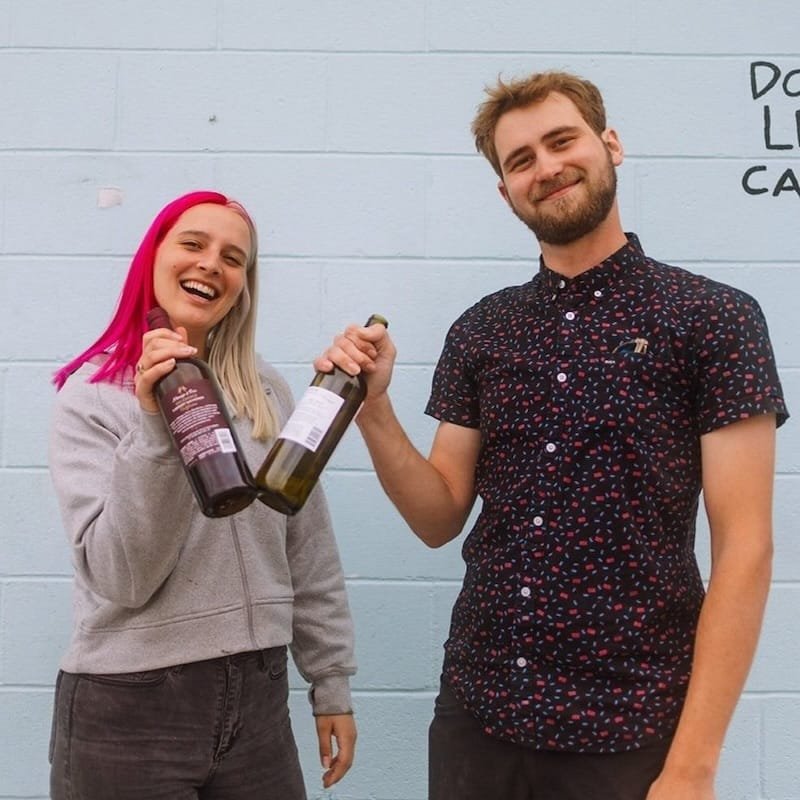
In her TED Talk, Franziska Trautmann highlights the power of individual action to create innovative solutions to local environmental challenges. The first problem she noticed was how Louisiana was falling short when it came to recycling glass. The result: about 295 million pounds of glass was ending up in landfills annually. The next problem Franziska identified was the fact that Louisiana was suffering from a coastal erosion crisis. Since glass is made from sand, the logical solution was to turn discarded glass into sand that could be used for coastal restoration.Glass Half Full Founder Franziska Trautmann

To turn their idea into reality, Franziska and her partner founded Glass Half Full, a company that’s diverted millions of pounds of glass from landfills and restored thousands of square meters of wetlands. At just over 5 minutes, her talk is brief, yet clearly highlights the issues, the initiative, the result, and their future plans.


While the talk was top notch, I really wanted it to be longer as there were lots of questions that came to mind: issues around the lack of recycling, the process of turning the glass into sand, alongside how to scale that process, and the nature of the state’s erosion crisis. But that was not to be, as Franziska’s talk was in a session created along with Ignite Talks, which are only 5 minutes in length.

It’s easy to see how this 5 minute talk could be expanded to 15, 30, 45 minutes in length. And that’s not uncommon when it comes to stories that involve social or scientific topics. If this is an issue you’re facing – how to compress a lengthy talk – then study this transcript to see how the main points are laid out in a way that a member of the public can follow and understand.

Transcript

00:04
As a kid growing up on a Louisiana bayou, the boogeyman was the existential threat of my state being washed away with the Mississippi River.

00:16
Louisiana loses a football field’s worth of land every 100 minutes due to coastal erosion. It’s an unimaginably large amount to a kid. But in my lifetime so far, we’ve lost over 600 square miles. That’s more area than New York City, San Francisco, DC and Atlanta combined. It’s due to sea level rise, warming waters, increasingly severe storms and exploration of the oil and gas industry.

00:51
Fast forward to 2020, in my last full semester as an engineering student and over a Two-Buck Chuck, my boyfriend and I lamented over the lack of glass recycling in Louisiana. My state was landfilling about 295 million pounds of glass annually. The bottle we just finished would likely end up in a landfill. It felt like a total waste, and we wanted to figure out how we could get all of this glass recycled.

01:20
The next day, it took a quick Google search to remember that glass comes from sand, and that sand is an increasingly finite resource. We also learned about everything sand is needed for, including toothpaste, by the way. And the last puzzle piece we found was this small, human-sized machine that could crush one bottle at a time into sand, and we jumped into action, setting up a GoFundMe campaign and a pilot project in the backyard of a fraternity house.

01:50
(Laughter)

01:52
Now you might be thinking to yourself, how in the world would two college kids ever be able to make a dent in these problems? And that would be valid. Plenty of people told us the exact same thing. But we didn’t listen, because we knew that no matter how small of an impact we made, it would be worth it. It felt like we could alleviate two problems with one solution: convert the otherwise landfilled glass back into sand and use it in restoration projects across the state. Easy, right?

02:22
(Laughs)

02:25
But we didn’t listen to the haters, which is actually why we named our company Glass Half Full.

02:30
(Laughter)

02:31
But that glass-half-empty mindset might actually be one of the biggest threats we face today. Because climate apathy might be the new climate denial. Meaning that the biggest threat to our environment may no longer be people who deny our part in the changing climate but people who deny that we can actually make a difference.

02:54
Now climate change is happening right before our eyes. It’s terrifying. I’ve witnessed firsthand the severity of rapidly intensifying hurricanes like Ida. But dread, doom and gloom tend to get us nowhere. Whereas hope, combined with action, can be one of the most powerful tools to enact change.

03:15
(Applause)

03:21
Since that late night wine-fueled idea over four years ago, we’ve been able to divert more than eight million pounds of glass from our landfills.

03:30
Thank you.

03:31
(Cheers and applause)

03:34
We quickly grew out of that small, tiny machine and upgraded a lot along the way. We continue to work with over 50 scientists and engineers across the Gulf South. And they helped me learn if this is good-smelling mud or not. But also understanding the interactions of our sand with the plants, animals and even fungi of our region. We’ve also answered difficult scientific questions as well as questions like, can you actually walk on sand made from glass? And I exposed my toes to the internet to answer that.

04:11
In a few short months, we’ll be opening up our new facility, enabling us to recycle the 295 million pounds of glass entering our landfills annually.

04:23
(Cheers and applause)

04:29
And with a combination of biodegradable sandbags and native marsh grasses, we’ve already restored thousands of square meters along our coast, converting open water back into thriving wetlands.

04:41
(Cheers and applause)

04:48
But the key to our success so far isn’t that we had all of the answers in the beginning or tons of money to try this thing out. The key was that we simply started, and we kept going. Somewhere, the belief that we, as individuals, could enact change trumped our doubts. And for us, finding a way to help with a problem much, much bigger than us meant taking that first step. And in our case, it was a step in the sand, in an eroding but once magnificent swamp.

05:22
Thank y’all.

If you enjoyed this article…Buy me a coffee

Learn more about the coaching process or
contact me to discuss your storytelling goals!

Subscribe to our newsletter for the latest updates!

Copyright Storytelling with Impact® – All rights reserved

Latif Nasser: You have no idea where camels really come from @ TED Talks Live

TED Talks Live were held at The Town Hall Theater in NYC, in November of 2015. I had the pleasure of attending all six nights to hear speakers present impactful Ideas Worth Spreading. This post is an analysis of a talk by Latif Nasser about a journey of scientific discovery that can help us to see the world anew.

Watch Latif’s TED Talk. You can feel his enthusiasm throughout the story. His vocal variation, facial expressions and body movements convey emphasis at every turn. This is an unusual presentation, structured as an interview, but there’s much you can learn about how to create and tell an impactful story.

Transcript

(my notes in red)

So, this is a story about how we know what we know. It’s a story about this woman, Natalia Rybczynski. She’s a paleobiologist, which means she specializes in digging up really old dead stuff.

I always tell storytellers not to open their narrative with the phrase ‘this is a story about’, as it’s usually better to let that information come out in the talk. But in the vein of ‘rules are meant to be broken’, the practice can be successful when there’s mystery attached to the statement. Latif’s opening line is simply stated, yet contains that sense of mystery and therefore it quickly grabs our attention.

(Audio) Natalia Rybczynski: Yeah, I had someone call me “Dr. Dead Things.”

Using audio clips within a story is unusual, but it can add impact when it allows someone else to speak – we hear the story in their own words – or adds information best delivered by that person. But the main reason Latif has chosen to use audio within his talk is that he works in radio, so it makes perfect sense to simulate his natural environment.

And I think she’s particularly interesting because of where she digs that stuff up, way above the Arctic Circle in the remote Canadian tundra. Now, one summer day in 2006, she was at a dig site called the Fyles Leaf Bed, which is less than 10 degrees latitude away from the magnetic north pole.

Latif not only tells us who the main character is in his story (Natalia) but takes us to a specific year (2006), a time of year (summer), a general area (Arctic Circle / remote Canadian tundra), and a specific place (dig site). In just 40 seconds.

(Audio) NR: Really, it’s not going to sound very exciting, because it was a day of walking with your backpack and your GPS and notebook and just picking up anything that might be a fossil.

And at some point, she noticed something.

(Audio) NR: Rusty, kind of rust-colored, about the size of the palm of my hand. It was just lying on the surface.

And at first she thought it was just a splinter of wood, because that’s the sort of thing people had found at the Fyles Leaf Bed before — prehistoric plant parts. But that night, back at camp …

(Audio) NR: … I get out the hand lens, I’m looking a little bit more closely and realizing it doesn’t quite look like this has tree rings. Maybe it’s a preservation thing, but it looks really like … bone.

Huh. So over the next four years, she went to that spot over and over, and eventually collected 30 fragments of that exact same bone, most of them really tiny.

(Audio) NR: It’s not a whole lot. It fits in a small Ziploc bag.

And she tried to piece them together like a jigsaw puzzle. But it was challenging.

The mystery continues, as it’s not clear what Natalia has found. Too often storytellers unravel a mystery too quickly, but in this story, the audience is moved along step by step.

(Audio) NR: It’s broken up into so many little tiny pieces, I’m trying to use sand and putty, and it’s not looking good. So finally, we had a 3D surface scanner.

Ooh! NR: Yeah, right?

It turns out it was way easier to do it virtually.

(Audio) NR: It’s kind of magical when it all fits together.

How certain were you that you had it right, that you had put it together in the right way? Was there a potential that you’d put it together a different way and have, like, a parakeet or something?

(Audio) NR: (Laughs) Um, no. No, we got this.

What she had, she discovered, was a tibia, a leg bone, and specifically, one that belonged to a cloven-hoofed mammal, so something like a cow or a sheep. But it couldn’t have been either of those. It was just too big.

(Audio) NR: The size of this thing, it was huge. It’s a really big animal.

So what animal could it be? Having hit a wall, she showed one of the fragments to some colleagues of hers in Colorado, and they had an idea.

(Audio) NR: We took a saw, and we nicked just the edge of it, and there was this really interesting smell that comes from it.

By this point the addition of Natalia’s narrative almost has her on stage, as though the interview is happening in front of the audience.

It smelled kind of like singed flesh. It was a smell that Natalia recognized from cutting up skulls in her gross anatomy lab: collagen. Collagen is what gives structure to our bones. And usually, after so many years, it breaks down. But in this case, the Arctic had acted like a natural freezer and preserved it.

Then a year or two later, Natalia was at a conference in Bristol, and she saw that a colleague of hers named Mike Buckley was demoing this new process that he called “collagen fingerprinting.” It turns out that different species have slightly different structures of collagen, so if you get a collagen profile of an unknown bone, you can compare it to those of known species, and, who knows, maybe you get a match.

Departing from Natalia’s journey, Latif includes a science story block that describes a revolutionary process which provides a turning point in the story.

So she shipped him one of the fragments, FedEx.

(Audio) NR: Yeah, you want to track it. It’s kind of important.

And he processed it, and compared it to 37 known and modern-day mammal species. And he found a match. It turns out that the 3.5 million-year-old bone that Natalia had dug out of the High Arctic belonged to … a camel.

(Audio) NR: And I’m thinking, what? That’s amazing — if it’s true.

So they tested a bunch of the fragments, and they got the same result for each one. However, based on the size of the bone that they found, it meant that this camel was 30 percent larger than modern-day camels. So this camel would have been about nine feet tall, weighed around a ton.

Yeah. Natalia had found a Giant Arctic camel.

The mystery is solved, and Latif delivers the line emphatically, which results in laughter. Had the sentence been delivered in a monotone fashion it would have been received as another bit of data. Revelations within a story are often presented in this dramatic fashion. So much has been revealed in his story, but we’re less than half way through. We wonder what’s next.

Now, when you hear the word “camel,” what may come to mind is one of these, the Bactrian camel of East and Central Asia. But chances are the postcard image you have in your brain is one of these, the dromedary, quintessential desert creature — hangs out in sandy, hot places like the Middle East and the Sahara, has a big old hump on its back for storing water for those long desert treks, has big, broad feet to help it tromp over sand dunes. So how on earth would one of these guys end up in the High Arctic?

Well, scientists have known for a long time, turns out, even before Natalia’s discovery, that camels are actually originally American. They started here. For nearly 40 of the 45 million years that camels have been around, you could only find them in North America, around 20 different species, maybe more.

(Audio) LN: If I put them all in a lineup, would they look different?

NR: Yeah, you’re going to have different body sizes. You’ll have some with really long necks, so they’re actually functionally like giraffes.

Some had snouts, like crocodiles.

(Audio) NR: The really primitive, early ones would have been really small, almost like rabbits.

What? Rabbit-sized camels?

(Audio) NR: The earliest ones. So those ones you probably would not recognize.

Oh my God, I want a pet rabbit-camel.

(Audio) NR: I know, wouldn’t that be great?

Within the science, we have a historical story block that continues below. Taking us back in time allows us to imagine the evolution that occurred. This could apply to many topics and gives the listener a frame of reference that extends beyond the current moment.

And then about three to seven million years ago, one branch of camels went down to South America, where they became llamas and alpacas, and another branch crossed over the Bering Land Bridge into Asia and Africa. And then around the end of the last ice age, North American camels went extinct.

So, scientists knew all of that already, but it still doesn’t fully explain how Natalia found one so far north. This is, temperature-wise, the polar opposite of the Sahara. Now to be fair, three and a half million years ago, it was on average 22 degrees Celsius warmer than it is now. So it would have been boreal forest, so more like the Yukon or Siberia today. But still, they would have six-month-long winters where the ponds would freeze over. You’d have blizzards. You’d have 24 hours a day of straight darkness. How is it that one of these Saharan superstars could ever have survived those arctic conditions?

We’re now on to mystery number two. It’s not uncommon for the solving of one question to raise a subsequent question. By stating that question implicitly, the narrative shift is clear.

Natalia and her colleagues think they have an answer. And it’s kind of brilliant. What if the very features that we imagine make the camel so well-suited to places like the Sahara, actually evolved to help it get through the winter? What if those broad feet were meant to tromp not over sand, but over snow, like a pair of snowshoes? What if that hump — which, huge news to me, does not contain water, it contains fat — was there to help the camel get through that six-month-long winter, when food was scarce?

And then, only later, long after it crossed over the land bridge did it retrofit those winter features for a hot desert environment? For instance, the hump may be helpful to camels in hotter climes because having all your fat in one place, like a fat backpack, means that you don’t have to have that insulation all over the rest of your body. So it helps heat dissipate easier. It’s this crazy idea, that what seems like proof of the camel’s quintessential desert nature could actually be proof of its High Arctic past.

Now, I’m not the first person to tell this story. Others have told it as a way to marvel at evolutionary biology or as a keyhole into the future of climate change. But I love it for a totally different reason. For me, it’s a story about us, about how we see the world and about how that changes. So I was trained as a historian. And I’ve learned that, actually, a lot of scientists are historians, too. They make sense of the past. They tell the history of our universe, of our planet, of life on this planet. And as a historian, you start with an idea in your mind of how the story goes.

While Latif does not go into any detail, just the mention that he was trained as a historian gives us a sense of who he is and why he’s interested in the topic to begin with. And he also makes the connection between history and story, which is something we naturally do has humans.

(Audio) NR: We make up stories and we stick with it, like the camel in the desert, right? That’s a great story! It’s totally adapted for that. Clearly, it always lived there.

But at any moment, you could uncover some tiny bit of evidence. You could learn some tiny thing that forces you to reframe everything you thought you knew. In this case, this one scientist finds this one shard of what she thought was wood, and because of that, science has a totally new and totally counterintuitive theory about why this absurd Dr. Seuss-looking creature looks the way it does. And for me, it completely upended the way I think of the camel. It went from being this ridiculously niche creature suited only to this one specific environment, to being this world traveler that just happens to be in the Sahara, and could end up virtually anywhere.

At this point we hear the true reason for Latif telling this story. In this case it’s about scientific discovery, but in the larger perspective, it’s about all of us. That our lives can be different based on the smallest bit of wisdom. It says that we don’t know where life will take us, but maybe, just maybe, it will take us on an amazing journey of discovery.

This is Azuri. Azuri, hi, how are you doing? OK, here, I’ve got one of these for you here.

So Azuri is on a break from her regular gig at the Radio City Music Hall.

That’s not even a joke. Anyway —

But really, Azuri is here as a living reminder that the story of our world is a dynamic one. It requires our willingness to readjust, to reimagine.

Right, Azuri?

And, really, that we’re all just one shard of bone away from seeing the world anew.

Bringing a camel on stage is not something that many of us could pull off, and it’s done for dramatic and humorous effect in Latif’s story, but he uses the visual of a live camel to bring home his message once again – that we can see the world anew.

Thank you very much.

Note Latif’s facial expressions, use of his hands and sound of his voice. All are expressive, which adds emphasis when he’s being serious, as well as when he’s being humorous. You can also see his head turn from side to side in order to address the entire audience. He doesn’t need to move about the stage, or even across the red circle. His connection to the audience is brilliant.

[Note: all comments inserted into this transcript are my opinions, not those of the speaker, the TED organization, nor anyone else on the planet. In my view, each story is unique, as is every interpretation of that story. The sole purpose of these analytical posts is to inspire a storyteller to become a storylistener, and in doing so, make their stories more impactful.]

If you enjoyed this article…Buy me a coffee

Learn more about the coaching process or
contact me to discuss your storytelling goals!

Subscribe to our newsletter for the latest updates!

Copyright Storytelling with Impact® – All rights reserved