Why Drones Need Our Better Angels

Austin Choi-Fitzpatrick PhD is an associate professor of political sociology. He teaches at the Kroc School of Peace Studies on the University of San Diego campus, and while his interests are varied, he’s most passionate when it comes to the study of social movements and social change, with an added emphasis on the role that technology plays in society.

Of particular interest is how the advent of small, commercially available drones will play out in our everyday lives. Austin opens his talk at the Kroc School’s Peace Innovators Conference by talking about how he and a grad student measured the size of a crowd during a protest in Budapest, Hungary. He’s a big believer in empowered people and accountable authorities.

This was a protest against the government’s plan to initiate a tax on internet usage. And while previous protests in Budapest had been relatively small, this one was predicted to be much bigger, and by using a drone to capture the event Austin was able to verify the size of the crowd, which was far greater than the government claimed. In the end, the government was forced to drop their plan. So in this case, drone technology served the public quite well.

Drones can help us see the world from a new perspective, and drones can hold the powerful to account. – Austin Choi-Fitzpatrick

But Austin goes on to talk about what may lie ahead with the expanded use of drones, as they can be used, just like any other technology, for good or for evil. He reminds us that the internet has evolved from the information superhighway, to the dark web, in the span of just three decades. Despite best intentions, over time the technology has enabled criminals.

Every technology carries its own negativity, which is invented at the same time as technical progress. – Paul Virilio

Online banking provides great benefit, yet it also exposes us to having our account hacked. Mapping software can guide us to our destination, while at the same time tracking our every move and location. Social media sites can connect us to friends, but can also become a platform for hijacked political debates. A classic case of unintended consequences.

And drones are undergoing a similar evolution. Watch Austin’s talk to gain insight as to how our future may be affected, for better or worse, by the increased implementation of drone technology. Which of the scenarios presented will come to pass? Do you seen this technology serving society, or becoming a tool for the self-serving? Are you excited, frightened, cautious?

Aerial Drone Over Lake

Photo by Skitterphoto from Pexels

In short, technology has become a character in our personal story, and can shift the narrative in many ways. As you think about the trajectory of your story, and the wisdom you wish to share with others, think about how technology has affected, or could affect, your storyline.

Peace Innovators is a program from the Kroc School of Peace Studies, University of San Diego in which select faculty members prepare presentations that are focused on the human issues they address within their professional studies as well as class curriculum. I had the pleasure of working with each of these speakers as they prepared their talks.

◆

If you enjoyed this article…Buy me a coffee

◆

Learn more about the coaching process or
contact me to discuss your storytelling goals!

◆

Subscribe to our newsletter for the latest updates!

Copyright Storytelling with Impact® – All rights reserved

Transcending the Border with Anchors Not Parachutes

Ev Meade, PhD, director of the Trans-Border Institute at the University of San Diego, explores how universities can help to build peace in places beset by violence and shrouded in fear, but only if we learn to see ourselves as anchors, rather than parachutes.

Often times the best of intentions don’t deliver the intended results in the nonprofit world. This can happen when organizations approach a difficult situation with a short term solution, and impose their ideas upon those in need without understanding the root of the problem.

In Ev Meade’s view, those “parachute” tactics fall short of the mark. In order to effect real, long-lasting change, organizations need to think of themselves as “anchors” who become embedded into the community, seeking feedback from those who live in the area and thus know what’s really going on. At that point solutions can be crafted for the long term.

In his talk Ev speaks about the challenges of working in Sinaloa, Mexico, home of the Sinaloa Drug Cartel, as well as the cartel’s former leader, Joaquín Guzmán, known as “El Chapo”.

Ev takes us into the community and describes what life is like for the residents, in one case highlighting the fact that “more than 90 percent of homicides do not produce an arrest.”

Despite the somber nature of the topic, Ev brings his passion and energy to the stage, with great use of vocal variation and pausing to support an evolving narrative that looks at failed policies, misconceptions and stereotypes, then presents a new way of dealing with troubled communities that involves an understanding of the facts and partnering with the community before becoming an anchor that can be relied upon.

Peace Innovators is a program from the Kroc School of Peace Studies, University of San Diego in which select faculty members prepare presentations that are focused on the human issues they address within their professional studies as well as class curriculum. I had the pleasure of working with each of these speakers as they prepared their talks.

◆

If you enjoyed this article…Buy me a coffee

◆

Learn more about the coaching process or
contact me to discuss your storytelling goals!

◆

Subscribe to our newsletter for the latest updates!

Copyright Storytelling with Impact® – All rights reserved

We were all humans until…

It had been awhile since this anonymous quote crossed my path, but I recently noticed it on a friend’s social timeline and realized it had achieved a newfound sense of resonance with me.

We were all humans until race disconnected us, religion separated us, politics divided us, and wealth classified us.

From a storytelling perspective it felt as though we had somehow stopped telling our story of connection, commonalty, a shared human heredity, and most importantly, a united future.

Hate and discrimination had somehow become acceptable, with divisiveness and rancor the norm. Religious travel bans, violence against people of color, and the continued verbal and physical abuse of women have defiled what America was striving to become – a land of open arms and caring hearts, a land that opted for hope over fear, that embraced love over hate.

“We are a nation not only of dreamers, but also of fixers. We have looked at our land and people, and said, time and time again, “This is not good enough; we can be better.” – Dan Rather, What Unites Us: Reflections on Patriotism

Multi-Ethnic Hands in Peace

As I continue to work with a wide array of speakers, from universities, research institutes, major corporations, prison inmates, and special forces, I’m reminded that our stories have the power to heal all wounds, bridge all chasms, and unite all humans.
You're already a storyteller guide at Lemon Squeezy
On a daily basis we have the choice to stand up and say, “This is not good enough; we can be better.” In doing so we can change this sadly fractured American narrative. But it requires our stories to be told, our voices to be heard, and our compassion to be felt.

June 2020 Update

It’s been a week since police killed George Floyd on May 25, 2020, adding his name to a lengthy list of victims that now includes: Michael Brown, Ahmaud Arbery, Tamir Rice, Trayvon Martin, Philando Castile, Sandra Bland, Breonna Taylor, Atatiana Jefferson, Botham Jean, Samuel DuBose, Alton Sterling, Jeremy McDole, Jonathan Sanders, Ezell Ford, Andy Lopez, Akai Gurley, John Crawford III, Antonio Martin, Walter Scott, Jonny Gammage, Freddie Gray, and Eric Garner.

The world grieves, families cry, people take to the streets in protest, while the president of the United States proclaims, “We have our military ready, willing and able, if they ever want to call our military. We can have troops on the ground very quickly.”

The answer? That’s the question on everyone’s mind. I hear various words mentioned – love, empathy, compassion, equality, justice. But words are not an answer. Someone says we need to embrace and celebrate our diversity. I agree, but how do we get from here to there?

The Civil Rights Act of 1964 was signed into law by President Johnson at the White House on July 2, 1964. Though we should remember that Johnson’s signature came after a 54-day filibuster in the United States Senate. Equality was a struggle then, and remains so to this day, nearly 56 years later.

◆

If you’re ready to craft your own personal story, these resources will help make it more impactful!
Storytelling in Three Steps
Ten Fundamental Story Blocks
The Essential Literary Elements

◆

Learn more about the coaching process or
contact me to discuss your storytelling goals!

◆

Subscribe to our newsletter for the latest updates!

Copyright Storytelling with Impact® – All rights reserved

The Tragic Story of Bail in America

The bail system in American is nothing short of criminal, a tragic story of incarceration for those who lack the funds to get back on the street while awaiting trial. It means being separated from your spouse & children, maybe missing work, and potentially losing your job. It means being guilty until proven innocent, which is about as un-American as it gets.

In an attempt to turn the tide on this tragedy of justice, Robin Steinberg and her husband, both public defenders, founded the Bronx Freedom Fund, and in doing so, attempt to change the story of thousands caught up in an immoral system.

The Bronx Freedom Fund envisions a society that humanizes instead of criminalizes. We restore the presumption of innocence by keeping clients with their families, at their jobs, and out of jail while they await trial. We work tirelessly to fight mass incarceration and the criminalization of race and poverty, and to end the cash bail system as it exists.

A decade later Robin took the stage at TED2018 to talk about The Bail Project, taking the idea to a national level as part of TED’s newly launched Audacious Project.

The Bail Project, by bailing out 160,000 people over the next five years, will become one of the largest non-governmental decarcerations of Americans in history.

What if we ended the injustice of bail? by Robin Steinberg at TED2018

Transcript

I will never forget the first time I visited a client in jail. The heavy, metal door slammed behind me, and I heard the key turn in the lock. The cement floor underneath me had a sticky film on it that made a ripping sound, like tape being pulled off a box, every time I moved my foot. The only connection to the outside world was a small window placed too high to see. There was a small, square table bolted to the floor and two metal chairs, one on either side.

That was the first time I understood viscerally — just for a fleeting moment — what incarceration might feel like. And I promised myself all those years ago as a young, public defender that I would never, ever forget that feeling. And I never have. It inspired me to fight for each and every one of my clients’ freedom as if it was my own.

Freedom. A concept so fundamental to the American psyche that it is enshrined in our constitution. And yet, America is addicted to imprisonment. From slavery through mass incarceration, it always has been. Look, we all know the shocking numbers. The United States incarcerates more people per capita than almost any nation on the planet.

But what you may not know is that on any given night in America, almost half a million people go to sleep in those concrete jail cells who have not been convicted of anything. These mothers and fathers and sons and daughters are there for one reason and one reason only: they cannot afford to pay the price of their freedom. And that price is called bail.

Now, bail was actually created as a form of conditional release. The theory was simple: set bail at an amount that somebody could afford to pay — they would pay it — it would give them an incentive to come back to court; it would give them some skin in the game. Bail was never intended to be used as punishment. Bail was never intended to hold people in jail cells. And bail was never, ever intended to create a two-tier system of justice: one for the rich and one for everybody else. But that is precisely what it has done.

Seventy-five percent of people in American local jails are there because they cannot pay bail. People like Ramel. On a chilly October afternoon, Ramel was riding his bicycle in his South Bronx neighborhood on his way to a market to pick up a quart of milk. He was stopped by the police. And when he demanded to know why he was being stopped, an argument ensued, and the next thing he knew, he was on the ground in handcuffs, being charged with “riding your bicycle on the sidewalk and resisting arrest.”

He was taken to court, where a judge set 500 dollars bail. But Ramel — he didn’t have 500 dollars. So this 32-year-old father was sent to “The Boat” — a floating jail barge that sits on the East River between a sewage plant and a fish market. That’s right, you heard me. In New York City, in 2018, we have a floating prison barge that sits out there and houses primarily black and brown men who cannot pay their bail.

Let’s talk for a moment about what it means to be in jail even for a few days. Well, it can mean losing your job, losing your home, jeopardizing your immigration status. It may even mean losing custody of your children. A third of sexual victimization by jail staff happens in the first three days in jail, and almost half of all jail deaths, including suicides, happen in that first week.

What’s more, if you’re held in jail on bail, you’re four times more likely to get a jail sentence than if you had been free, and that jail sentence will be three times longer. And if you are black or Latino and cash bail has been set, you are two times more likely to remain stuck in that jail cell than if you were white.

Jail in America is a terrifying, dehumanizing and violent experience. Now imagine for just one moment that it’s you stuck in that jail cell, and you don’t have the 500 dollars to get out. And someone comes along and offers you a way out. “Just plead guilty,” they say. “You can go home back to your job. Just plead guilty. You can kiss your kids goodnight tonight.” So you do what anybody would do in that situation. You plead guilty whether you did it or not. But now you have a criminal record that’s going to follow you for the rest of your life.

Jailing people because they don’t have enough money to pay bail is one of the most unfair, immoral things we do as a society. But it is also expensive and counterproductive. American taxpayers — they spend 14 billion dollars annually holding people in jail cells who haven’t been convicted of anything. That’s 40 million dollars a day.

What’s perhaps more confounding is it doesn’t make us any safer. Research is clear that holding somebody in jail makes you significantly more likely to commit a crime when you get out than if you had been free all along.

Freedom makes all the difference. Low-income communities and communities of color have known that for generations. Together, they have pooled their resources to buy their loved ones freedom for as long as bondage and jail cells existed. But the reach of the criminal legal system has grown too enormous, and the numbers are just too large. Ninety-nine percent of jail growth in America has been the result — over the last 20 years — of pre-trial incarceration.

I have been a public defender for over half my life, and I have stood by and watched thousands of clients as they were dragged into those jail cells because they didn’t have enough money to pay bail. I have watched as questions of justice were subsumed by questions of money, calling into question the legitimacy of the entire American legal system. I am here to say something simple — something obvious, but something urgent. Freedom makes all the difference, and freedom should be free.

But how are we going to make that happen? Well, that’s the question I was wrestling with over a decade ago when I was sitting at a kitchen table with my husband, David, who is also a public defender. We were eating our Chinese takeout and venting about the injustice of it all when David looked up and said, “Why don’t we just start a bail fund, and just start bailing our clients out of jail?” And in that unexpected moment, the idea for the Bronx Freedom Fund was born.

Look, we didn’t know what to expect. There were plenty of people that told us we were crazy and we were going to lose all of the money. People wouldn’t come back because they didn’t have any stake in it. But what if clients did come back? We knew that bail money comes back at the end of a criminal case, so it could come back into the fund, and we could use it over and over again for more and more bail. That was our big bet, and that bet paid off.

Over the past 10 years, we have been paying bails for low-income residents of New York City, and what we have learned has exploded our ideas of why people come back to court and how the criminal legal system itself is operated. Turns out money isn’t what makes people come back to court.

We know this because when the Bronx Freedom Fund pays bail, 96 percent of clients return for every court appearance, laying waste to the myth that it’s money that mattered. It’s powerful evidence that we don’t need cash or ankle bracelets or unnecessary systems of surveillance and supervision. We simply need court reminders — simple court reminders about when to come back to court.

Next, we learned that if you’re held in jail on a misdemeanor, 90 percent of people will plead guilty. But when the fund pays bail, over half the cases are dismissed. And in the entire history of the Bronx Freedom Fund, fewer than two percent of our clients have ever received a jail sentence of any kind.

Ramel, a week later — he was still on the boat, locked in that jail cell. He was on the cusp of losing everything, and he was about to plead guilty, and the Bronx Freedom Fund intervened and paid his bail. Now, reunited with his daughter, he was able to fight his case from outside. Look, it took some time — two years, to be exact — but at the end of that, his case was dismissed in its entirety. For Ramel —

For Ramel, the Bronx Freedom Fund was a lifeline, but for countless other Americans locked in jail cells, there is no freedom fund coming. It’s time to do something about that. It’s time to do something big. It’s time to do something bold. It’s time to do something, maybe, audacious?

We want to take our proven, revolving bail-fund model that we built in the Bronx and spread it across America, attacking the front end of the legal system before incarceration begins.

We’re going to bail out as many people as we can as quickly as we can. Over the next five years, partnering with public defenders and local community organizations, we’re going to set up 40 sites in high-need jurisdictions. The goal is to bail out 160,000 people.

Our strategy leverages the fact that bail money comes back at the end of a case. Data from the Bronx shows that a dollar can be used two or three times a year, creating a massive force multiplier. So a dollar donated today can be used to pay bail for up to 15 people over the next five years. Our strategy also relies on the experience and the wisdom and the leadership of those who have experienced this injustice firsthand.

Each bail project site will be staffed by a team of bail disrupters. These are passionate, dedicated advocates from local communities, many of whom were formerly incarcerated themselves, who will pay bails and support clients while their cases are going through the legal system, providing them with whatever resources and support they may need. Our first two sites are up and running. One in Tulsa, Oklahoma, and one in St. Louis, Missouri. And Ramel? He’s training right now to be a bail disrupter in Queens County, New York.

Our next three sites are ready to launch in Dallas, Detroit and Louisville, Kentucky. The Bail Project will attack the money bail system on an unprecedented scale. We will also listen, collect and elevate and honor the stories of our clients so that we can change hearts and minds, and we will collect critical, national data that we need so we can chart a better path forward so that we do not recreate this system of oppression in just another form. The Bail Project, by bailing out 160,000 people over the next five years, will become one of the largest non-governmental decarcerations of Americans in history.

So look — the criminal legal system, as it exists — it needs to be dismantled. But here’s the thing I know from decades in the system: real, systemic change takes time, and it takes a variety of strategies. So it’s going to take all of us. It’s going to take the civil rights litigators, the community organizers, the academics, the media, the philanthropists, the students, the singers, the poets, and, of course, the voices and efforts of those who are impacted by this system. But here’s what I also know: together, I believe we can end mass incarceration.

But one last thing: those people, sitting in America, in those jail cells, in every corner of the country, who are held in jail on bail bondage, right now — they need a lifeline today. That’s where The Bail Project comes in. We have a proven model, a plan of action, and a growing network of bail disrupters who are audacious enough to dream big and fight hard, one bail at a time, for as long it takes, until true freedom and equal justice are a reality in America.

Thank you.

◆

If you enjoyed this article…Buy me a coffee

◆

Learn more about the coaching process or
contact me to discuss your storytelling goals!

◆

Subscribe to our newsletter for the latest updates!

Copyright Storytelling with Impact® – All rights reserved

Creating a Storytelling Workshop for African Entrepreneurs

I get requests to conduct storytelling workshops from a variety of sources, from business networks to startups and professional organizations. But I was recently asked to craft a storytelling workshop for a group of amazing African entrepreneurs who were coming to American as part of the Mandela Washington Fellowship program. At first I assumed they were high school or college students, just getting started in their career, but I was way off the mark on that assumption.

Mandela Washington Fellowship at University of San Diego

I began the workshop, as all such meetings do, with introductions from each of the attendees in the room. In the U.S. we think of states, but in Africa, it’s countries. Zambia, Togo, Senegal, Zimbabwe, Uganda, Mauritius, Kenya, Ethiopia, South Africa, South Sudan, and Nigeria (I’m sure I missed a few) were all represented as each of the women and men spoke up.

The Uber of tutors, a novel payment collection system, a philanthropic software platform, sports journaling and entrepreneurial accelerators were mentioned. Many of these “students” had already started 2 or 3 companies and were changing lives in their communities.

I wasn’t sure what the entrepreneurs most wanted to hear most – I had no chance to speak to them before the workshop began – so I created a hybrid that combined the essentials of a great TED/TEDx talk, with material from my brand storytelling workshops. It turned out to be a good mix, as the entrepreneurs articulated their brand philosophy and tactics like savvy business leaders.

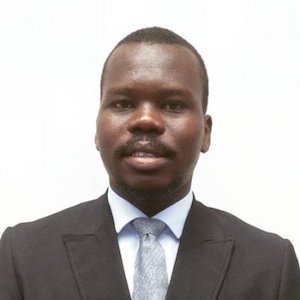
Joseph Oliver Wani AYAN Africa

Joseph Oliver Wani was one of the remarkable leaders sitting directly in front of me. As the finance manager for the African Youth Action Network (AYAN), Joseph was dedicated to helping refugees from South Sudan.

Founded in June 2015, in Uganda by South Sudanese young people, AYAN has worked directly with UNHCR (United Nations High Commissioner for Refugees) to support South Sudanese young refugees to receive scholarships to study in Uganda. The organization believes that Illiteracy is one of the major cause of conflict in South Sudan. The organization is currently registered in South Sudan with a branch in Uganda and looking forward to opening in Kenya.

African Youth Action Network (AYAN)At AYAN, we believe that the youth are well positioned to organize and participate in promoting a movement of sustainable peace through the organization of positive, non-violent, community-building activities, through trainings, mentorship, community outreach programmes in the Great Lakes Region and other volatile Parts of Africa.

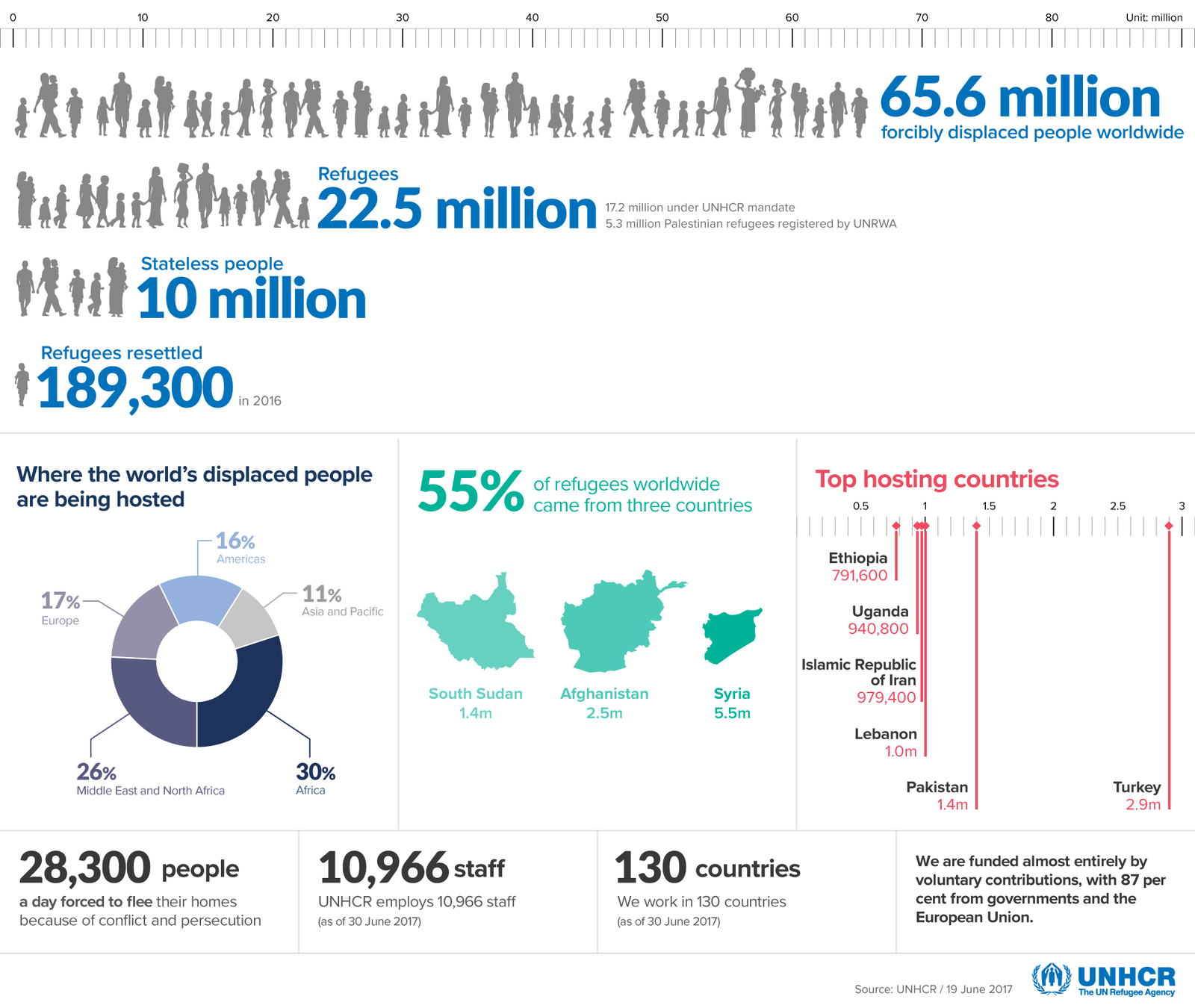
In the United States the refugee crisis – which has reached staggering numbers – is not something we think about very often, as it’s “over there” somewhere, yet the impact on humanity will be felt for generations to come. And to be honest, it wasn’t a topic that I expected to materialize when I was getting ready to conduct this workshop – entrepreneur and refugee crisis didn’t mix in my mind.Refuge Figures July 2017 UNHCR

As to Joseph, I had the opportunity to continue the conversation a week later during closing night ceremonies on the University of San Diego campus. He had just spent the the past six weeks in the U.S. studying business and entrepreneurship, and he was excited to return to his work, to apply the skills and insights gained, not to create the latest widget or cool app, but to help those fleeing violence in their home country. I couldn’t have been more proud of this young man.

In closing, my thanks go to the San Diego Diplomacy Council who played a major role in the program and invited me to participate. I’m sure I learned more from the process than the students.

Learn more about the coaching process or
contact me to discuss your storytelling goals!

◆

Subscribe to our newsletter for the latest updates!

Copyright Storytelling with Impact® – All rights reserved